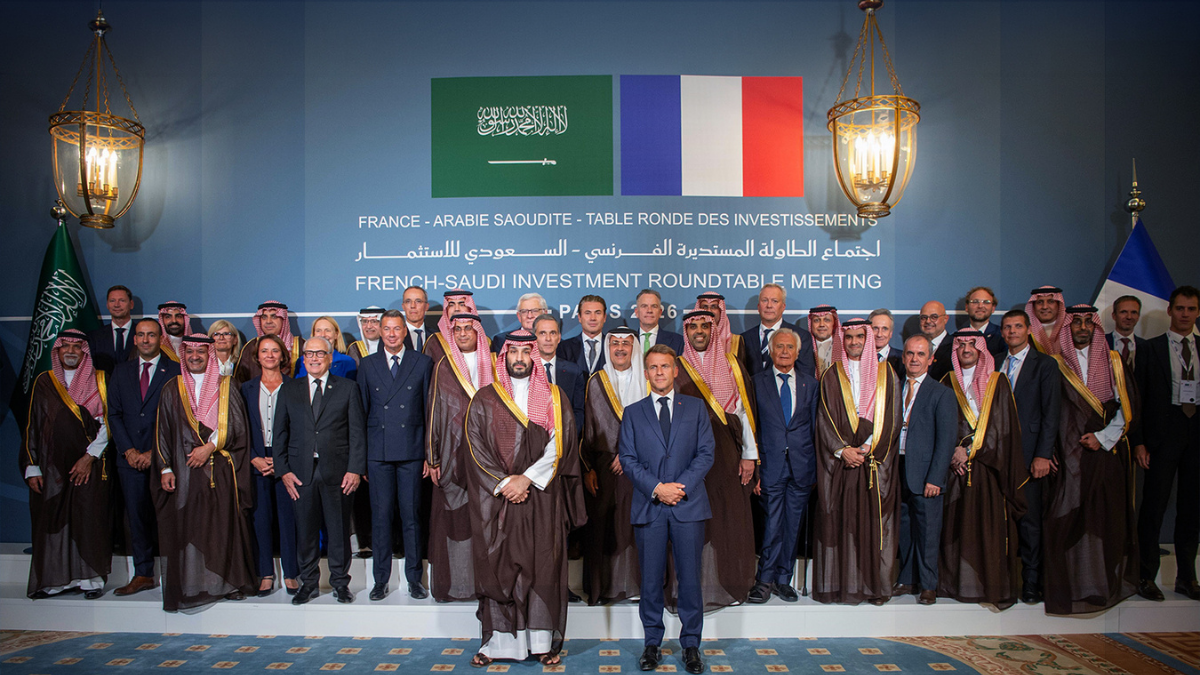
On August 24, 2026, 🇸🇦 Saudi Arabia and 🇫🇷 France signed a memorandum of understanding for a €6 billion ($7 billion) entertainment destination in Cergy-Pontoise, about 30 kilometres northwest of Paris. The agreement was signed during a two-day visit to France by Saudi Arabia’s de facto ruler, Crown Prince Mohammed bin Salman, and covers the construction of three theme parks near Cergy-Pontoise, one widely reported to be built around the Dragon Ball franchise. The parks are expected to create some 22,000 direct jobs, compared with around 20,000 generated by Disneyland Paris, and the project will be led by Qiddiya, a subsidiary of Saudi Arabia’s sovereign wealth fund
That’s the headline number, and the manga connection between the two leaders, who reportedly discovered a shared interest in Dragon Ball Z during a December 2024 conversation in Riyadh, has understandably taken up most of the coverage this week. The part we found more useful to dig into is different: why is Qiddiya, a company whose first theme park inside 🇸🇦 Saudi Arabia opened less than a year ago, confident enough to lead its first major project abroad, and why has it chosen a site with a specific, and not entirely encouraging, Saudi theme-park history.
Once we looked past the headline figure, the Cergy-Pontoise deal reads less like a one-off bet on a French site and more like the export version of an entertainment model 🇸🇦 Saudi Arabia has already built and tested at home.
A framework agreement, not a finished contract
What was signed this week is a memorandum of understanding, not a binding construction contract. The €6 billion figure is the total investment expected across the development’s lifecycle, not a fixed construction budget, and several structural details, including the ownership model, the eventual operator, the exact hotel count and the full delivery timeline, have not yet been made public. The ownership structure, the future operator, the breakdown of the €6 billion and the timeline are not known at this stage. The Île-de-France region has reportedly been supporting the project for around 18 months, and two other sites, one in Spain and one in the United Kingdom, were reportedly considered before Cergy-Pontoise was chosen. The planned site covers around 200 hectares in Courdimanche, near Cergy, roughly seven times the footprint of the site’s former theme park.
That earlier theme park is worth knowing about, because it changes how we’d read the risk on this one.
The same site, a second attempt
Cergy-Pontoise isn’t new to Saudi-backed theme parks. The site once housed Mirapolis, France’s first theme park, which opened in 1987 with private Saudi funding and aimed to showcase French literature, before closing due to financial difficulties within four years. This time, the theming leans on a franchise with an established international fanbase rather than a national literary canon, and one of the three planned parks is widely expected to be built around Dragon Ball.
We don’t think that history predicts the outcome here. But it’s the closest real precedent available on the ground, and any serious read of the project’s commercial risk should account for it rather than treat this as an untested bet in an untested location.
Qiddiya has already run this exact playbook once
Here’s the detail we think gets missed. Qiddiya isn’t experimenting with Dragon Ball as a licensed attraction for the first time in 🇫🇷 France. It’s already developing the world’s first dedicated Dragon Ball theme park inside Qiddiya City near Riyadh, announced in March 2024 in partnership with Toei Animation, covering more than 500,000 square metres across seven themed zones based on locations from the series. That domestic project gives Qiddiya working experience with the licensing relationship, ride design and visitor proposition before any version of it gets exported.
The wider Qiddiya City development gives a sense of the model behind it. Qiddiya City spans more than 360 square kilometres across more than 20 neighbourhoods, about three times the size of Paris, and is planned around 400 attractions, 12 theme parks and 43 sports facilities once complete. Its first major opening, Six Flags Qiddiya City, launched on December 31, 2025, with 28 rides and attractions, including Falcons Flight, currently the world’s longest, tallest and fastest roller coaster. Aquarabia, the accompanying water park, opened with 22 rides across eight themed zones. Both parks already run on a five-year strategic partnership with Al Rajhi Bank as Official Banking Partner and Premier Sponsor, with naming rights on two flagship attractions, the Iron Rattler coaster and the Junoon Drop water ride. That’s likely close to the commercial structure Cergy-Pontoise will draw on once its own sponsorship programme is built.
One line inside a much bigger financial relationship
The theme park announcement didn’t land in isolation. French investment stock in 🇸🇦 Saudi Arabia reached €16.3 billion ($19 billion) in 2024, doubling over five years and making 🇫🇷 France the Kingdom’s fourth-largest source of foreign direct investment, spread across 651 licences and 18 sectors, with manufacturing still accounting for around 60 percent of that stock.
The relationship also runs the other way. 🇸🇦 Saudi Arabia’s Public Investment Fund, Qiddiya’s parent, invested approximately €7.36 billion (~$8.5 billion) in 🇫🇷 France between 2017 and 2024, supporting nearly 29,000 jobs, and the two sides signed an additional financing memorandum of understanding worth €8.56 billion (~$10 billion) between PIF and French public investment bank Bpifrance. The same visit also produced a $434 million port development contract with CMA CGM in Jeddah and a $580 million Alstom order for Riyadh metro trains. Set against that, Cergy-Pontoise looks less like a standalone entertainment bet and more like one visible line item inside an increasingly two-way investment relationship.
The brand had already been tested in Paris this summer
There’s one more data point worth adding, because we think it strengthens the read rather than just decorating it. Before this deal was signed, Qiddiya had already run a live activation in the same city. It was a founding partner of the 2026 Esports World Cup, hosted at Paris Expo Porte de Versailles from July 6 to August 23, the tournament’s first edition outside 🇸🇦 Saudi Arabia, drawing more than 2,000 players and 200 clubs from over 100 countries. Qiddiya held naming rights on one of the event’s four competition stages, the Qiddiya City Grid, which seated more than 1,000 spectators. Riyadh remains the tournament’s permanent home, but the Paris run put Qiddiya’s brand in front of a global gaming audience about six weeks before the theme park announcement.
Two Qiddiya-branded activations landing in the same city within weeks of each other reads less like coincidence and more like a market being tested with lower-risk activations before capital gets committed to permanent infrastructure.
What this means for money, growth and decision-makers
For anyone allocating capital or structuring deals in Gulf sports and entertainment, three things stand out to us.
On the money, treat the €6 billion figure as a lifecycle number tied to an MOU, not a confirmed construction budget. The financing structure, ownership split and phased spend will emerge over the coming months, and that’s where the more useful analysis will actually sit.
On growth, the more transferable lesson isn’t the theme park itself, it’s the sequencing behind it. Qiddiya tested the IP partnership, the ride portfolio and the sponsorship structure at home before taking any of it abroad. For other Gulf entertainment and sports developers watching this deal, prove the model domestically first, then export it, looks like a far more repeatable growth path than launching an unproven concept directly into a new international market.
On decision-makers, projects built this way need more than construction expertise. They need commercial strategy that works across two markets at once, sponsorship structuring that can be replicated rather than reinvented, and project management that keeps a multi-year, multi-party agreement on track from MOU to opening day, alongside the CSR and community planning that a project of this scale in a new country will eventually need. That’s the kind of work we do at Forward Sports Consultation, and it’s exactly where a project like this either holds together or starts to slip.
We’ll be watching how the ownership structure, financing and timeline for Cergy-Pontoise firm up over the coming months, and how much of Qiddiya’s Saudi-tested model survives the trip intact.
What matters more to you when a Gulf entertainment or sports project moves into a new market: the size of the capital committed, or the strength of the model being exported? We’d like to hear your take.