
Abu Dhabi Sports Facilities: What Makes People Come Back?
Abu Dhabi’s sports facilities and programs are expanding, alongside encouraging signs of greater physical activity.
But a practical question sits behind the investment: can residents find an activity they can afford, reach and return to every week?
We believe the next stage of sports development should put repeat participation at the center of planning. Buildings, courts and cycling tracks create opportunities. Their lasting value depends on how easily people can use them.
The latest official participation figures give us a useful starting point.
What the Abu Dhabi Sports and Physical Activity Survey Shows
The fourth Abu Dhabi Sports and Physical Activity Survey covered 2025. Conducted by the Department of Community Development in collaboration with Abu Dhabi Sports Council, it received approximately 31,000 responses. Results were released in June 2026.
| Indicator | 2024 | 2025 | Change |
|---|---|---|---|
| Overall physical activity participation | 53.6% | 60.3% | +6.7 percentage points |
| Children and adolescents achieving 60 minutes of daily physical activity | 12.5% | 14.8% | +2.3 percentage points |
| Awareness of community sports events | 21% | 25% | +4 percentage points |
| Satisfaction with sports facilities | 76% | 78% | +2 percentage points |
Source: Department of Community Development’s official survey results.
These indicators measure different things. Overall physical activity includes activity beyond organized sport, while the children’s indicator measures a specific daily duration.
The published announcement summarizes findings without providing enough methodological detail to independently assess sampling, weighting or statistical significance. It also does not identify the contribution of individual facilities.
We therefore read the results as encouraging evidence that deserves deeper investigation.
How Abu Dhabi Is Expanding Opportunities to Participate
Sports infrastructure takes several forms: permanent venues, outdoor routes and temporary programs that bring activities together in one location.
Three examples illustrate the range of approaches.
Abu Dhabi Summer Sports: Indoor Access During Summer
The 2026 Abu Dhabi Summer Sports program ran at ADNEC Centre Abu Dhabi from 6 June to 23 August.
According to its organizer, the edition offered:
- Approximately 48,000 square meters of indoor space, up 26%.
- More than 70 fields, courts and pitches, up 27%.
- 29 sports and activities, including 10 new additions.
- Daily opening from 6 a.m. to 1 a.m.
Football, basketball, padel, badminton and other activities were offered in an air-conditioned environment. These figures describe a seasonal program rather than permanent additions to the emirate’s facility stock.
Source: ADNEC’s Abu Dhabi Summer Sports 2026 announcement.
We see a useful planning principle here: availability should reflect the conditions in which people live. Indoor access and a broad choice of time slots can help address scheduling and summer-weather barriers.
The next question is what happens after a seasonal program finishes. We would examine whether participants move into ongoing neighborhood sessions, clubs or coaching programm.
Cycling Facilities at Hudayriyat Island and Al Wathba
Bike Abu Dhabi lists established cycling hubs with 28 kilometers of track at Hudayriyat Island and 40 kilometers at Al Wathba.
Source: Bike Abu Dhabi’s official overview.
For community participation, we would assess the experience surrounding those routes: beginner guidance, equipment access, transport, suitable session times and opportunities to join a group.
A route may appeal to confident cyclists while requiring additional support to welcome someone trying the activity for the first time.
Hudayriyat Island’s Wider Sports Masterplan
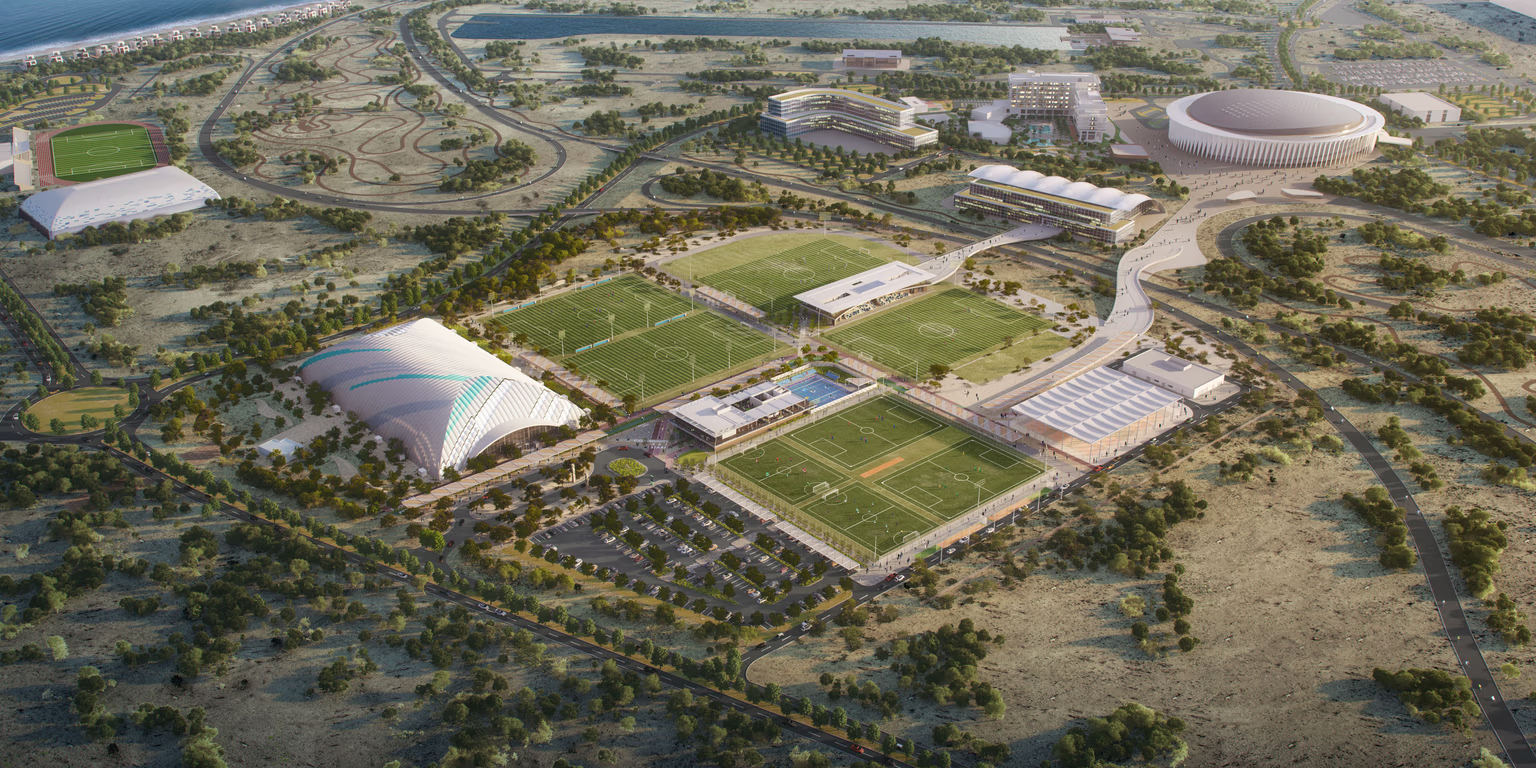
The Hudayriyat Island masterplan announced in 2023 spans more than 51 million square meters and includes a planned 220-kilometre cycling network, alongside sports, residential and leisure development.
The full planned network should not be described as completed on the basis of that announcement.
Source: Abu Dhabi Media Office’s Hudayriyat Island masterplan announcement.
Our interest is how large developments connect with everyday participation. We would examine access from surrounding neighborhoods, the range of activities available and the costs involved in using them regularly.
Why Youth Participation Deserves Particular Attention
The children’s activity indicator raises an important planning question: how can more families fit movement into an ordinary week?
We would start by testing practical arrangements rather than assuming which barrier matters most.
Could schools connect families with nearby programs? Could siblings attend activities at the same time? Are beginner sessions welcoming to children with different abilities? Can parents understand the full cost before booking?
For example, a weekly after-school session at a predictable time could be tested against occasional introductory events. The useful comparison would include attendance, repeat participation and feedback from families.
We would also look beyond competitive pathways. Some children may prefer informal games, swimming, cycling or activities built around enjoyment and social connection.
A successful program should offer several ways to participate.
From Awareness to a Weekly Sports Habit
Knowing that an event exists is one step. Finding a suitable session and attending it regularly requires several more.
We would examine the whole journey:
- Discovery: Can residents find activities near them?
- Understanding: Are age groups, ability levels and prices clear?
- Booking: Is registration straightforward?
- First visit: Does someone explain what to expect?
- Return: Is there a convenient next session?
Consider a parent looking for a football activity after school. A useful listing would show the location, age group, start time, price, equipment requirements and whether beginners are welcome.
That information helps someone decide whether participation fits their life.
Local outreach through schools, employers and neighborhood groups could be tested alongside broader promotion. We would compare which channels generate attendance and which attract participants who return.
The Business Case for Repeat Participation
For sports facility operators, recurring use can support bookings, coaching programs and memberships. Whether it produces a sustainable business depends on pricing, operating costs and demand.
We would distinguish between three measures:
Visits show how often a venue is used.
Unique participants show how many different people it reaches.
Returning participants show whether people come back.
A busy program may serve a small group repeatedly, attract many occasional visitors or combine both patterns. Each outcome has different implications for commercial planning and community reach.
Pricing also needs testing. An affordable introductory session might attract newcomers, but operators still need a workable way to cover delivery costs. Partnerships or targeted support could help widen access where a commercial offer alone leaves gaps.
For decision-makers, the useful question is how public objectives and operating economics fit together.
What We Would Measure Next
We would recommend a facility-level dashboard that connects participation, access and financial performance.
| Measure | What it helps us understand |
|---|---|
| Return rate after 30 and 90 days | Whether first-time visitors continue |
| Occupancy by day and time | Where capacity is busy or underused |
| Participation by age and neighborhood | Which communities the offer reaches |
| Booking cancellations and reasons | Where practical barriers emerge |
| Revenue per available court-hour | How income relates to usable capacity |
| Program delivery costs | Whether an activity can continue sustainably |
| Participant feedback | What makes the experience easier or harder |
These are proposed measures, rather than results established by the published survey.
We would begin with a small number of venues, establish a baseline and test changes such as revised schedules, beginner sessions or school partnerships. Decisions could then follow the observed results.
Building a Sports Offer People Can Use Regularly
Abu Dhabi has several routes to broader participation: indoor seasonal programs, established outdoor facilities and larger developments that integrate sport with other uses.
We believe their next opportunity lies in the everyday details: a convenient session, clear pricing, welcoming instruction and an easy route back.
For residents, those details shape whether an activity becomes part of the week.
For operators, they help reveal where recurring demand exists.
For public decision-makers, they provide a way to assess how investment reaches different communities.
What would make you participate more regularly: lower prices, a closer facility, better opening hours or a group to join?
Share your experience in the comments. We would like to hear from residents, coaches and facility operators about what brings people back.